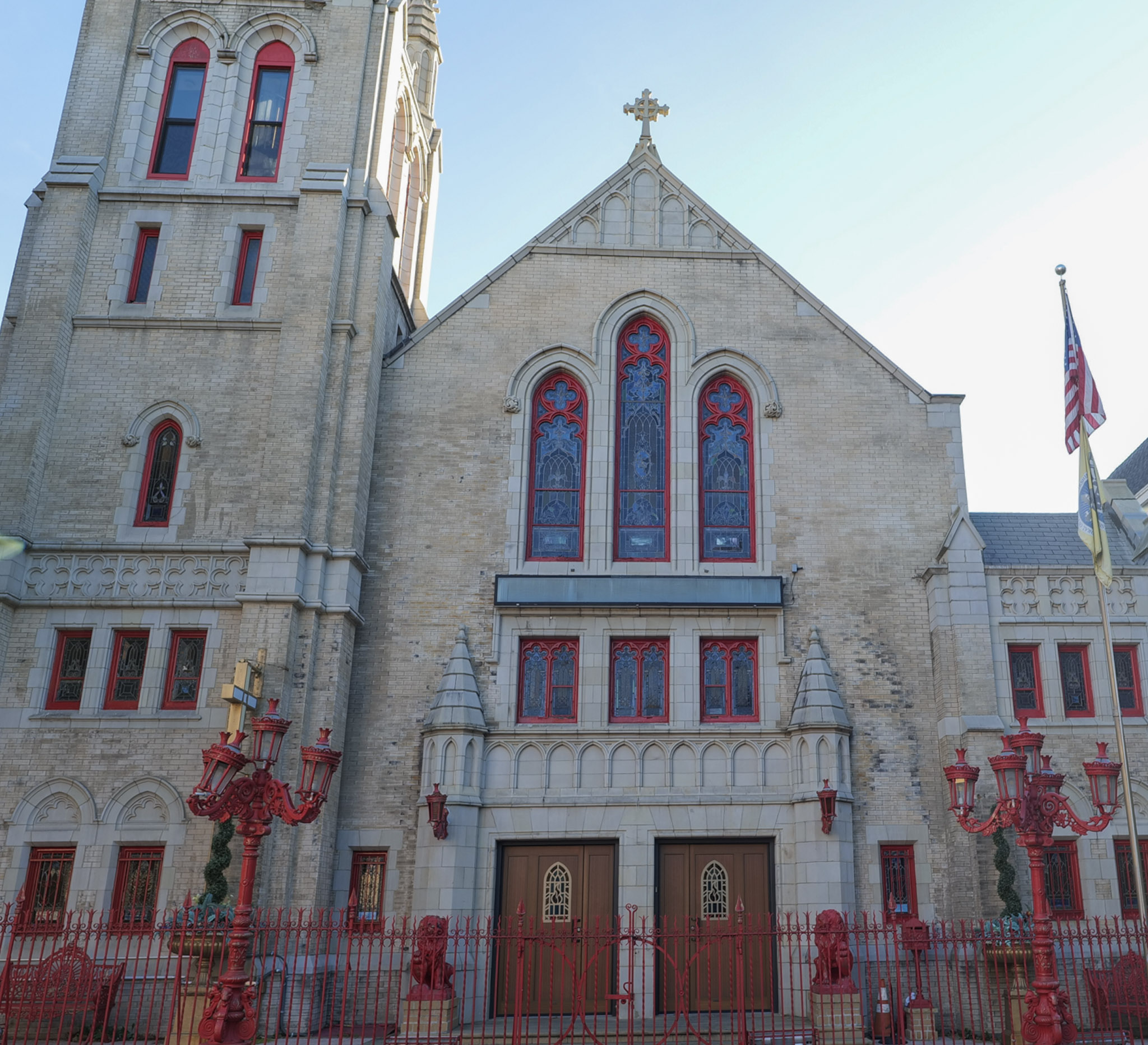
BROOKLYN — Citadel Cathedral of Praise & Worship paid $1.8 million upfront for its East New York building. Its members then helped restore a sanctuary that church leaders said had stood vacant for five years.
Now, after a foreclosure auction, the congregation is asking for help to stay.
For its leaders, the question is not simply how a debt went unpaid. It is how a church could commit so much to a property, struggle to obtain the financing needed to keep it and ultimately face losing its investment.
“The system is setting us up for failure,” said Senior Pastor Dr. Kevin Bond.
That concern drove an Oct. 27 forum on deed theft and the church at Citadel, 105–107 Barbey Street. Hosted by Evangeline Byars of the People’s Coalition to Stop Deed Theft, the gathering connected the congregation’s experience to a broader discussion about exploitation, displacement and the loss of Black-owned property. Former New York City Council member and state Assembly member Charles Barron spoke at the event; attorney Jacqueline McMickens was also listed as a featured speaker.
Speakers argued that protecting property requires examining not only fraudulent transfers but also the transactions, financing barriers and foreclosure processes that can leave owners vulnerable.
For Citadel, the stakes are immediate.
“We have no plan B. We have no other option,” said Elder Edison Bond, the church’s administrator. “We want to stay in our building.”
A Balloon Payment—and a Struggle to Refinance
Kevin Bond said the congregation acquired the property in 2016. Edison Bond described a $2.3 million purchase from a Lutheran church entity, with $1.8 million paid upfront and the seller financing the remaining $500,000.
The balance carried interest-only payments for two years, followed by a balloon payment, Edison Bond said.
The congregation expected to refinance the debt with a bank loan. Kevin Bond said that proved difficult.
“Banks don’t want to loan to churches,” he said. “We had a hard time doing that.”
Churches can face obstacles in conventional lending. Banking-industry materials and mortgage trade reporting cite concerns about donation-dependent revenue, limited alternative repayment sources and religious buildings that can be difficult to resell after foreclosure. Some banks avoid church lending, while others participate under conservative lending standards.
An interest-only arrangement leaves the principal balance unpaid through those interest payments. Borrowers expecting to refinance a balloon payment can face substantial financial risk if a new loan is unavailable.
At Citadel, church leaders said, the financing challenge came alongside the expense of restoring the building.
Kevin Bond said the congregation undertook plumbing and electrical work and installed bathrooms, roofs and floors. Edison Bond recalled the condition of the roof before repairs.
“We had to have umbrellas when it rained,” he said.
Kevin Bond said the church entered foreclosure during the pandemic. Edison Bond said the property was sold at auction in April 2025.
Church leaders want the auction reversed so the congregation can remain. Kevin Bond estimated that roughly $1 million would be needed to address the outstanding obligation, including fees.
He described a congregation that includes single mothers, seniors and families with limited resources who sacrificed to buy and improve the property.
“They put their last dollar in here,” he said. “And we need intervention. We need help.”
Beyond a Stolen Signature
For speakers at the forum, the fight against deed theft belongs within a larger effort to protect communities from predatory practices that lead to property loss.
“There are so many victims of deed theft and mortgage fraud in the church,” Byars said.
Citadel’s leaders placed their experience in that broader conversation, questioning the purchase and foreclosure process and describing the difficulty of obtaining financing after committing the congregation’s resources.
Kevin Bond warned about people who pressure eager buyers into agreements without allowing enough time to understand the consequences.
“We have a lot of sharks in the ocean,” he said.
He urged congregations to secure representation that protects their interests and to discuss proposed transactions openly rather than let urgency dictate their decisions.
“Don’t sign anything without representation,” Bond said. “And not just any representation. Make sure your lawyer has your best interest in mind.”
His warning extended beyond the moment of purchase to whether a congregation can sustain the agreement over time.
“Let’s get together and let’s talk about all the ramifications, the pros and the cons,” he said. “Is this going to work? Will this not work? What’s going to happen in the next five years?”
Breaking the Silence
Byars said embarrassment and fear can keep people facing property problems from seeking assistance.
At Citadel, she said, the forum gave church leaders an opportunity to speak publicly, receive support and recognize that they were not alone.
“Tonight, you know, Citadel got a chance to tell their story,” she said.
Byars encouraged pastors and church leaders to seek legal advice about ownership documents, succession planning and transactions. The coalition, she said, can help connect people with lawyers and support.
“If you enter into some deal and you need help, things aren’t going well, just reach out to us,” she said.
For Edison Bond, preserving the building means preserving the church’s role as a gathering place and community resource. He said the congregation’s experience had underscored the importance of grassroots organizing and advocacy.
“The people do have the power,” he said.
But the prospect of starting again elsewhere remains daunting.
“How do you start over in this economy that we’re in?” he asked.
‘Organize for Power’
Barron argued that education about property loss must be accompanied by sustained political organizing.
“People gotta be educated to know how deed theft happens and how to stop it,” he said.
He described deed theft, homelessness and poverty as symptoms of deeper economic and political problems, arguing that addressing individual cases without confronting those conditions would not be enough.
“You gotta organize for power,” Barron said.
Assembly District 56 district leaders Omar Hardy and Carmella Charrington connected that message to their experiences resisting property loss.
Hardy spoke about his family’s ownership claims involving the Slave Theater and Black Lady Theatre, which he maintains were taken from his family and the community. He said those struggles helped shape his emphasis on civic participation and the institutions that influence decisions about property.
“The engagement is the protection,” he said.
Hardy said organizers plan to bring additional educational events to other neighborhoods and work with public officials on proposals. He urged residents to see themselves as participants in finding solutions rather than wait for someone else to intervene.
“We are the creators, we are the solution,” he said.
Charrington described community support during an effort to keep her family in its longtime home. She encouraged more residents to become involved in public life.
“We couldn’t continue and be like this,” she said. “So we just encourage other people, you know, just to get involved.”
Her message echoed the determination expressed by Citadel’s leaders.
“There is no plan B,” Charrington said. “We’re staying in our properties.”
At Citadel, the larger discussion about property and political power comes back to the congregation’s future in the sanctuary its members helped purchase and restore.
“We want to be able to continue this, the great legacy of the Black church,” Edison Bond said, “to be that center for the community.”
For information about the People’s Coalition to Stop Deed Theft, call 347-757-1212.